In accordance with Circular No. PS/SB/Circular/2/2025, dated 18 February 2025, issued by the Secretary to the President, the Internal Affairs Unit (IAU) of the Attorney General’s Department has been formally established as part of the Government’s national initiative to strengthen integrity, accountability, transparency, and good governance across public institutions.
This initiative is implemented in line with the Anti-Corruption Act, No. 9 of 2023, the National Anti-Corruption Action Plan (2025–2029), and Sri Lanka’s commitments under the United Nations Convention against Corruption (UNCAC).
The Internal Affairs Unit serves as an institutional mechanism to promote ethical conduct, safeguard the integrity of public officials, enhance public confidence in the services provided by the Department, and ensure that complaints relating to misconduct, corruption, malpractice, or service delivery are addressed in a fair, transparent, and accountable manner.
Submission of Complaints
iau@agd.gov.lk |
|
| Telephone | 011 2147888 / 011 2149000 |
| Postal Address |
Internal Affairs Unit Attorney General’s Department No.159, Sanchi Arachchi, Colombo 12 |
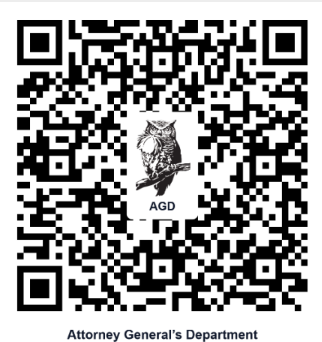
Online SubmissionVia QR Code : |
 |
Members Composition of the Internal Affairs Unit
| Position in the IAU | Officer’s Name | Designation |
|---|---|---|
| Head of the Unit | Mr. Raveendra Pathiranage, PC | Additional Solicitor General |
| Member | Mr. Azad Navavi, PC | Additional Solicitor General (Administration) |
| Member | Mr. Rajitha Perera | Deputy Solicitor General |
| Member | Ms. Anoopa de Silva | Deputy Solicitor General |
| Member | Ms. Nimalika Gunatilake | Senior State Counsel (Acting) |
| Member | Ms. Ganga Wakishtaarachchi | Deputy Solicitor General |
| Member | Ms. Chaya Sri Nammuni | Deputy Solicitor General |
| Member | Ms. R. V. A. L. Rajapaksha | Chief Accountant |
| Member | Mr. W. A. T. Wijesinghe | Chief Internal Auditor |
| Member | Ms. W. G. P. Samarasinghe | Chief Management Services Officer (Civil Division) |
| Member | Ms. Irangani Perera | Chief Management Services Officer (Criminal Division) |
Key Objectives
The following objectives are expected to be achieved through the establishment of the Internal Affairs Unit:
- Prevent corruption and develop a culture of integrity within the institution.
- Ensure transparency and accountability in all activities of the institution and ensure public access to information related to institutional activities and decisions.
- Promote ethical governance within the institution.
- Assist in law enforcement in cooperation with law enforcement agencies and the Commission to Investigate Allegations of Bribery or Corruption.
- Develop a safe and accessible mechanism to encourage reporting of misconduct, protect whistleblowers, and maintain confidentiality.
Responsibilities and Functions
The Internal Affairs Unit is entrusted with the following key responsibilities and functions to ensure proactive, transparent, and focused anti-corruption efforts while strengthening institutional integrity
- Examine current procedures and circulars to identify systemic bottlenecks within the institution and simplify them to enhance operational efficiency.
- Conduct Corruption Risk Assessments (CRAs) to identify areas in the institution vulnerable to corruption and unethical conduct and take targeted preventive measures.
- Develop and implement an Institutional Integrity Action Plan outlining specific anti corruption objective and strategies tailored to the institution’s needs.
- Ensure full compliance with national anti-corruption goals by aligning institutional policies and practices with the National Anti-Corruption Action Plan.
- Conduct regular compliance reviews to assess the institution’s compliance with national and international anti-corruption laws, including the Anti-Corruption Act No. 9 of 2023, and identify areas for improvement.
- Ensure compliance with Asset Declaration requirements for all public officials and employees, and manage conflicts of interest in accordance with CIABOC regulations and the Anti-Corruption Act No. 9 of 2023.
- Establish a secure system to receive and manage complaints related to corruption and unethical conduct in the institution; ensure that all such complaints are promptly addressed by relevant officials or units; and provide regular feedback to the parties involved, ensuring transparency and accountability. If necessary, refer relevant facts, findings or information to the CIABOC for investigation under the Anticorruption Act.
- Develop and publish a Citizen’s Charter outlining services provided by the institution.
- Establish and enforce policies that promote ethical governance, including a standardized code of conduct to be adhered to by public officials.
- Implement measures, including training and awareness creation, to motivate employees to commit to anti-corruption principles.
- Act as the institutional focal point for the National Anti-Corruption Integrity Assessment, ensuring that the institution participates in and aligns with the integrity assessment processes, as guided by CIAВОС and the national anti-corruption framework.
- Maintain liaison with the CIABOC to receive ongoing guidance and support in executing the Unit’s duties.
- Produce periodic and annual reports summarizing the IAU’s activities, progress in anti corruption initiatives, challenges faced, and recommendations for further actions.
- Collaborate with private sector stakeholders to plan and implement integrity development programs.